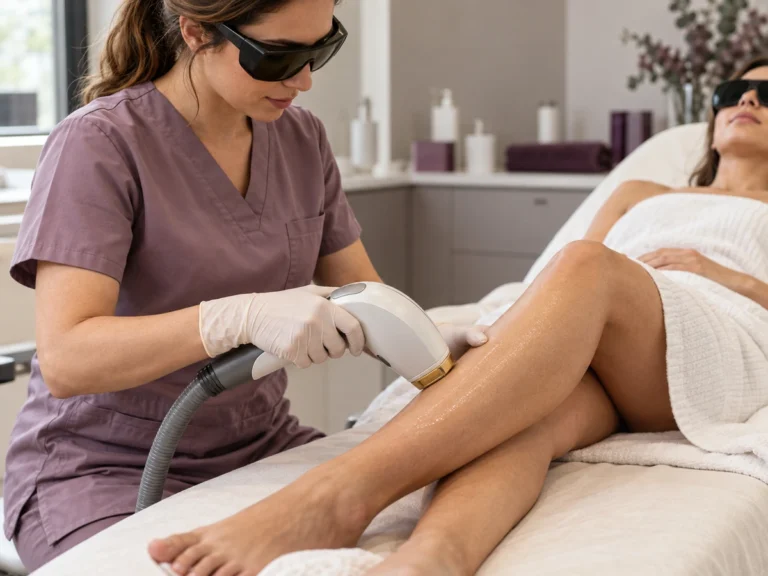


Laser hair removal and sun exposure need to be considered together when planning treatment in Ras Al Khaimah. At Alnoor Medical Center, laser hair removal is available for suitable areas of the face and body, with preparation and care adapted to individual needs. Beach days, outdoor exercise and recent tanning are relevant details to discuss before an appointment. This article explains why changes in skin colour matter, when treatment may need to wait, and how to organise everyday outdoor activities around your treatment plan without assuming that sunscreen removes every risk.

Why do laser hair removal and sun exposure affect treatment planning?
Laser energy is absorbed by melanin, the pigment found in hair and skin. A recent tan changes the amount of pigment in the skin being treated. This can affect how energy is absorbed and increase the possibility of unwanted skin reactions. Your practitioner therefore needs to assess your skin as it looks now, rather than relying only on an earlier consultation.
Your natural skin phototype also helps inform the assessment. However, naturally darker skin and recently tanned skin are different considerations, and neither should be judged from a photograph alone. Suitable equipment, appropriate settings and experience with your skin tone all matter. A treatment plan should reflect these factors rather than a universal approach for everyone.
When should a recent tan or sunburn delay an appointment?
Tell the clinic about any recent tanning, sunburn or unexpected colour change before attending. Do not assume that skin is ready simply because redness has disappeared or peeling has stopped. The practitioner needs to decide whether the treatment area has recovered sufficiently. The waiting period depends on your skin and the planned procedure.
There is no single number of days that makes every recent tan safe to treat. The area involved, the degree of exposure and the current skin response all influence timing. A planned holiday is also relevant because protection will be needed after the appointment. Share those dates early so that your schedule can be reviewed before treatment takes place.
How can you manage outdoor activities between sessions?
Sun protection involves more than applying a product before leaving home. Shade and clothing help reduce direct exposure, while suitable sunscreen protects uncovered skin. Follow the instructions given for your treatment area, especially while it remains sensitive. Sunscreen should not be treated as permission to sunbathe.
Consider how your ordinary routine exposes the area being treated. Walking outdoors, sitting beside a pool and exercising outside may all affect your ability to follow care instructions. Practical planning can make those instructions easier to maintain. Before each appointment, discuss:
- Recent beach visits, tanning or sunburn affecting the treatment area.
- Upcoming travel, swimming plans or extended outdoor activities.
- Whether clothing can comfortably cover the area after treatment.
- Any skin reaction or product irritation since the previous appointment.
What skin changes should you report after treatment?
Some temporary redness, swelling or discomfort can follow treatment. Ask what response is expected for your skin and how long it should last. Follow the clinic’s advice if a cool compress or gentle cleansing is recommended. Avoid rubbing or picking at skin that feels irritated.
Hyperpigmentation is one possible complication, while hypopigmentation describes lighter patches. Colour changes should be reported rather than covered up and ignored before another appointment. Blistering, marked pain, crusting or worsening symptoms also require prompt professional advice. An online photograph cannot reliably establish whether a reaction is minor or needs treatment.
How should you organise your next treatment interval?
Your treatment interval is based on the area being treated, hair growth and your response. It should also allow the practitioner to reassess any change in skin condition. Bringing an appointment forward to fit a holiday does not automatically improve progress. If your skin is unsuitable on the planned date, postponement may be the safer decision.
Keep a simple record of appointment dates, reactions and significant sun exposure. This gives your practitioner useful information when reviewing the next session. Mention new medicines and changes in skincare as well, because preparation advice may need updating. Do not stop prescribed medication yourself to keep an appointment; discuss it with the relevant healthcare professional.
Laser hair removal and sun exposure: planning around your skin
A workable schedule takes account of your skin, your daily routine and the activities you have planned. Avoid deliberate tanning, disclose recent exposure and follow the care instructions for the treated area. These steps help support informed decisions, although they cannot remove every treatment risk. Progress should be reviewed across appointments rather than judged against a fixed promise.
At Alnoor Medical Center, face and body treatment is planned according to individual assessment. Clear information about outdoor activities helps the team explain whether an appointment should proceed or be rescheduled. The aim is a realistic plan that respects your skin’s condition and makes preparation and follow-up care understandable.
📞 +971 72288451
💬 +971 72288451
✉️ info@alnoordental.com
📍 8th Floor, Al Naeem Tower 3, Etisalat Street, Ras Al Khaimah, United Arab Emirates