

Botox for lines at rest raises a common question: if movement becomes softer, why can a crease still be seen? At Alnoor Medical Center in Ras Al Khaimah, Botox injections are planned after assessment of muscle activity, skin condition and individual goals. A line that appears while frowning is different from one that remains when your face relaxes. Understanding that distinction helps set realistic expectations. This article explains what treatment can change, why some marks persist, and which questions are useful before deciding whether any further care is appropriate.

How does Botox for lines at rest differ from treating movement?
Dynamic wrinkles appear or deepen as the face moves. A line between the brows may become stronger when you concentrate, then soften when you relax. Botox reduces selected muscle activity that contributes to this repeated folding. Its action is therefore directed at a source of movement rather than adding material beneath a crease.
Static wrinkles remain visible without an active expression. Their appearance may reflect established skin folding alongside age-related changes in the skin and supporting tissues. Some may soften after treatment, but complete removal is not assured. The clinician needs to examine both the relaxed face and its movement to explain which changes are reasonably achievable.
Why can a crease remain even when the muscle moves less?
Reducing muscle contraction changes how strongly the overlying skin folds during an expression. It does not directly replace lost tissue or reverse every change in skin quality. A crease can therefore remain visible even when the movement that previously deepened it is reduced. This does not, by itself, show that the medicine has failed.
Look at the concern you discussed before treatment rather than using a completely smooth photograph as the standard. A realistic goal may have been a softer frown or less pronounced folding. The depth of an established crease can be a separate issue. Ask the clinician to distinguish the effect on movement from any change in the line itself when reviewing your response.
What should the clinician assess before treating the forehead?
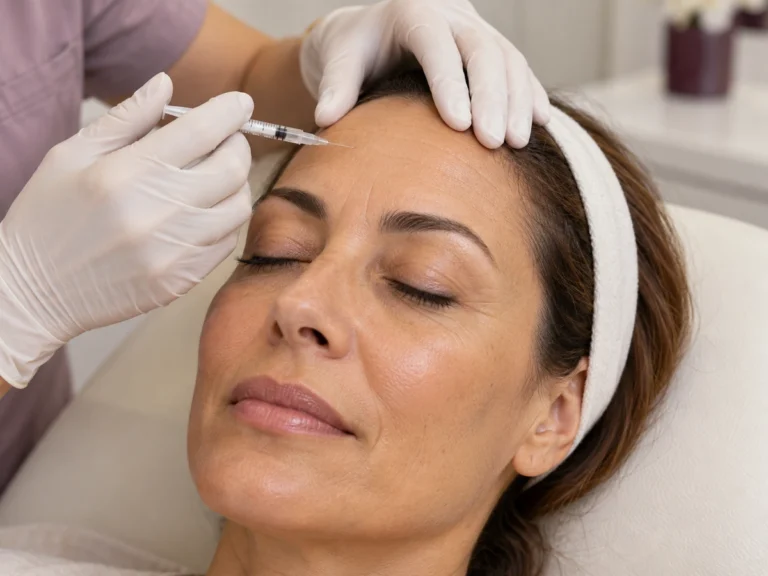
Forehead lines are linked partly to the activity of the frontalis muscle, which raises the eyebrows. Some people also use that muscle to compensate for a heavy brow. Its role cannot be judged simply by counting visible creases. Eyebrow position, eyelid function and habitual movement all contribute to planning.
Frown lines involve a different pattern of muscle activity between the eyebrows. Treating one area can influence the balance of the upper face, so assessment considers how neighbouring muscles work together. A stronger reduction in movement is not automatically a better result. Your clinician should explain what can be softened while also discussing the possibility of unwanted heaviness or changes in expression.
Which questions help you describe the result you want?
Explain whether the concern is the line at rest, the appearance during movement, or both. These goals may require different expectations even when they concern the same area. Bring up any previous treatment and what you liked or disliked about it. A discussion based on your own face is more useful than asking to copy someone else’s appearance.
Terms such as baby Botox do not define a universal technique or guarantee a particular outcome. A relatively small dose still needs to match the medicine, anatomy and treatment goal. Ask how the proposed approach relates to your concern rather than choosing by a label alone. Useful questions include:
- Is this line mainly visible during movement or also at rest?
- Which part of my concern is treatment expected to improve?
- Could reducing movement affect my brows or eyelids?
- What limitations and possible complications should I understand?
When should you review a line that still looks unchanged?
Treatment onset takes time, so the appearance immediately after the appointment cannot establish the eventual response. Changes usually begin over several days, and the clinician should explain when assessment is appropriate for the product and area. Follow that advice rather than arranging an immediate extra injection. A review should compare movement and appearance with your starting position.
The duration of effect is also individual, and movement gradually returns as the treatment wears off. The timing of another treatment should follow assessment rather than a fixed social calendar. Report unexpected eyelid or brow changes promptly instead of waiting for a routine review. Difficulty breathing, swallowing or speaking, or significant generalised weakness after treatment requires immediate medical attention.
Botox for lines at rest: set expectations around the cause
A visible crease and the muscle movement beneath it are related, but they are not identical treatment targets. Reducing movement may soften some lines without removing every mark seen at rest. Further care is not automatically necessary, and adding more medicine is not a universal solution. The next step depends on what the examination shows and what matters to you.
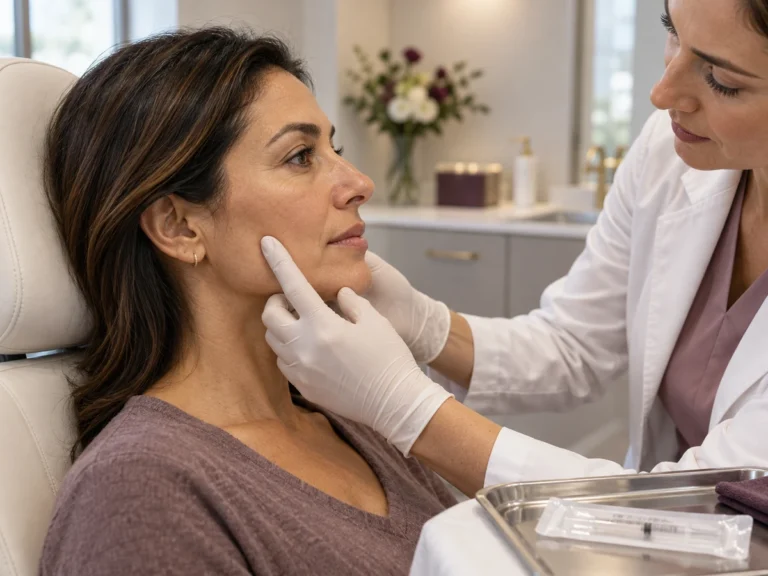
At Alnoor Medical Center, assessment considers facial movement, skin condition and personal expectations before treatment is recommended. Clear discussion helps distinguish a reasonable treatment goal from an unrealistic promise of completely line-free skin. Understanding those limits supports informed decisions about whether treatment, review or a different approach is appropriate.
📞 +971 72288451
💬 +971 72288451
✉️ info@alnoordental.com
📍 8th Floor, Al Naeem Tower 3, Etisalat Street, Ras Al Khaimah, United Arab Emirates