The dental veneer treatment process involves much more than selecting a shade and placing a thin restoration over a tooth. Successful veneer treatment requires careful assessment of the natural teeth, enamel, gums, bite, tooth proportions and the aesthetic changes the patient would like to achieve.
At Alnoor Medical Center in Ras Al Khaimah, veneer treatment is planned according to the individual smile. Different materials and preparation techniques can be considered, while digital technologies can help the dental team evaluate proportions and communicate the proposed treatment before the final restorations are placed.
How does the dental veneer treatment process begin?
The first step is understanding what the patient would like to change and whether dental veneers are actually the appropriate treatment for those concerns.
Veneers may be considered when addressing aspects such as tooth shape, proportions, colour, small spaces or certain visible irregularities. However, not every aesthetic concern needs to be treated with a veneer. The condition and position of the natural teeth, gum health and bite all influence the decision.
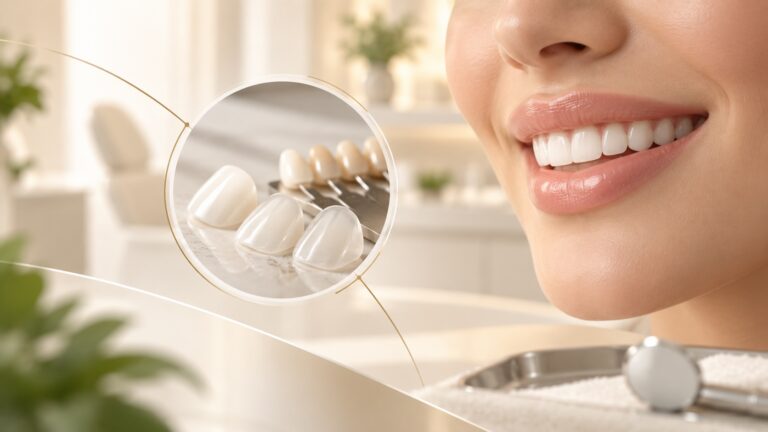
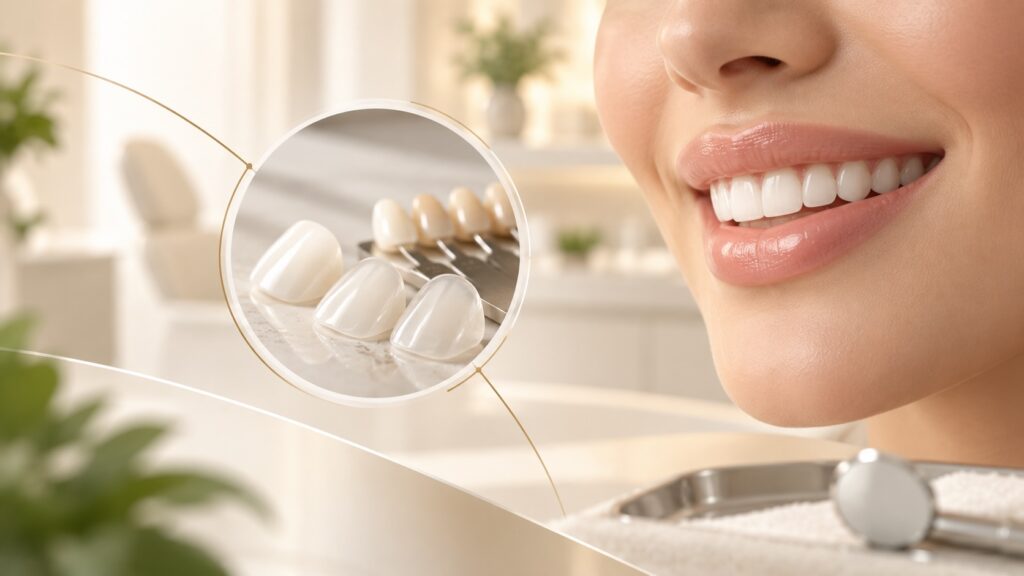
Different restorative options can also be evaluated. Porcelain veneers are thin ceramic restorations produced individually before being bonded to the teeth. Composite veneers use tooth-coloured resin to modify the visible surfaces, while composite bonding may be used more selectively to change particular areas, edges or proportions.
When several aesthetic elements are being considered together, a smile makeover with veneers may involve assessing how different teeth contribute to the overall smile rather than treating each tooth as an isolated element.
Why is enamel so important when planning veneers?
Enamel in veneer treatment is particularly important because it is the natural outer surface of the tooth and provides a valuable substrate for adhesive bonding.
Modern aesthetic dentistry therefore aims to preserve healthy tooth structure whenever clinically possible. This does not mean that every veneer can simply be added to an untouched tooth. If a tooth is already prominent or the planned restoration requires additional space, adding material without preparation could create excessive thickness or unnatural contours.
Tooth preparation for veneers is therefore planned according to the existing tooth and the intended final restoration. In suitable cases, minimal-prep veneers can limit how much natural tooth structure needs to be modified.
Patients may also encounter the term no-prep veneers. This describes situations where little or no preparation may be possible, but it should not be understood as a technique suitable for everyone. Tooth position, colour and the amount of change required determine whether this conservative approach is appropriate.
How are the shape and colour of veneers planned?
Aesthetic planning is not simply about choosing the whitest possible shade. Natural teeth have variations in colour, brightness, surface texture and the way they interact with light.
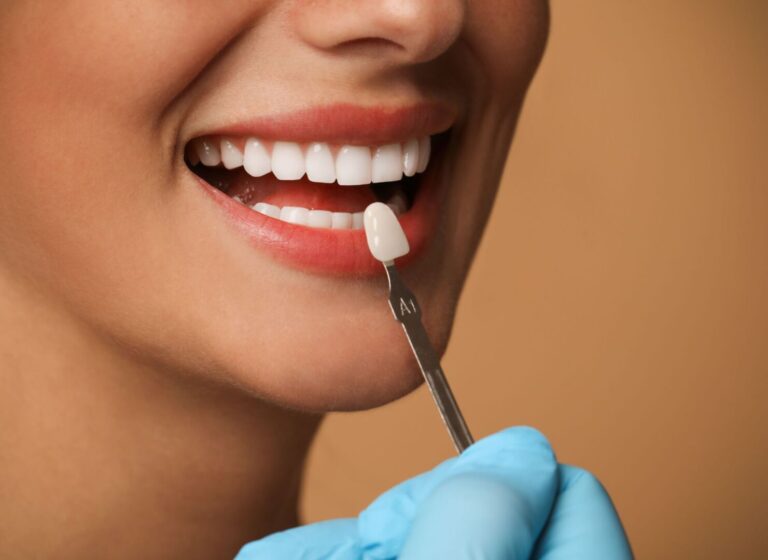
Veneer shade matching considers these characteristics together with neighbouring natural teeth and the patient’s overall smile. This is particularly important when veneers are being placed only on selected teeth because the restorations need to integrate with teeth that will remain untreated.
Veneer translucency is another important concept. Natural enamel allows light to interact with the tooth in a complex way, creating depth. Ceramic restorations can be designed with different optical characteristics to reproduce aspects of this appearance.
The underlying tooth colour also matters. A highly translucent veneer may allow more of the natural tooth underneath to influence the final appearance, while different restorative characteristics may be required when greater masking is necessary.
What role does Digital Smile Design play?
At Alnoor Medical Center, Digital Smile Design can support the planning of aesthetic dental treatments. Digital records can help evaluate tooth proportions and their relationship with the patient’s smile and facial features.
This technology can also improve communication. Instead of discussing tooth length, width or symmetry only in abstract terms, digital visualisations can help patients better understand the direction of the proposed treatment.
However, digital planning should be considered a tool rather than a promise of an identical final result. The actual treatment still depends on natural tooth structure, gums, bite, restorative materials and clinical limitations.
The value of digital planning lies in helping the dentist approach veneers as part of a complete smile rather than simply creating a series of identical white teeth.
What happens after the teeth have been prepared?
If preparation is necessary, the next stages depend on the chosen restorative workflow. When definitive ceramic restorations are not placed during the same appointment, temporary veneers may be used.
These provisional restorations can protect prepared surfaces and provide a temporary representation of certain aspects of the planned smile. They may feel or look somewhat different from the definitive restorations because their purpose and materials are different.
Before permanent placement, a veneer try-in can allow the dentist to assess the restorations in relation to the teeth and smile. Fit, proportions and aesthetic integration can be checked before final bonding.
This is one reason communication at the beginning of treatment is so important. The final stage should be the result of planning carried out throughout the process rather than the first time the overall smile design is considered.
How are veneers attached to natural teeth?
Veneer bonding is the process used to create the connection between the restoration and the natural tooth. It involves specific surface preparation and adhesive protocols rather than simply placing a veneer over the tooth.
For certain ceramic restorations, resin cement for veneers forms part of this adhesive process. Because veneers can be very thin, the characteristics of the underlying bonding material may also influence aspects of the final appearance.
Once a veneer has been positioned and bonded, the dentist checks its relationship with the surrounding teeth and gums. The veneer margins, where the restoration meets the natural tooth, are also carefully evaluated.
These transitions are important for both appearance and long-term hygiene. Patients still need to clean the natural tooth and gum tissues surrounding the veneer, even though the visible restoration itself is an artificial material.
Can veneers stain or change appearance over time?
Patients often assume that every type of veneer behaves exactly like a natural tooth, but restorative materials have different characteristics.
Veneer staining can mean several things. Porcelain generally has good resistance to surface staining, while composite materials may be more susceptible to colour changes and can sometimes benefit from professional polishing or maintenance.
In other situations, the veneer itself may not have significantly changed colour. Natural neighbouring teeth can become darker, deposits can accumulate around restorations, or discolouration may appear near the margins.
For this reason, patients should avoid trying to correct apparent staining with aggressive abrasives or unapproved home techniques. A professional examination can determine whether the change involves the veneer surface, natural teeth, margins or another factor.
What does veneer maintenance involve?
Veneer maintenance begins with the same fundamentals required for natural teeth: effective brushing, interdental cleaning and regular professional examinations.
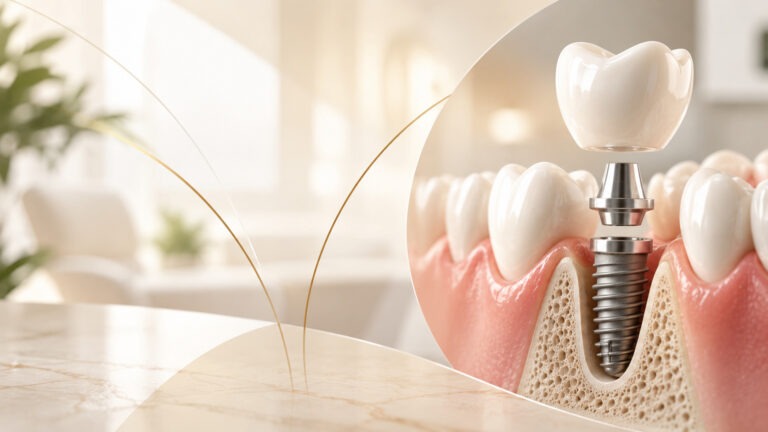
Although a veneer itself cannot develop tooth decay, the natural tooth supporting it remains biologically active and needs appropriate care. The gums around veneers also need to remain healthy, which makes plaque control particularly important around the margins.
Patients should avoid using veneered teeth to open packaging or bite hard non-food objects. Dental restorations are designed for normal oral function, not for inappropriate mechanical forces.
Professional appointments also allow the dentist to monitor the surfaces, veneer margins, surrounding gums and bite and to identify changes that may require maintenance.
Why does bruxism matter before and after veneers?
Bruxism and dental veneers is an important consideration because repeated clenching or grinding can create high forces on both natural teeth and restorations.
Some patients know that they grind their teeth, while others may only become aware after a dentist identifies signs such as tooth wear, fractures or muscle-related symptoms. This is why bite assessment forms part of planning before aesthetic restorations are placed.
Bruxism does not automatically exclude a patient from veneer treatment, but it may influence the restorative approach and long-term protection strategy. In suitable cases, a nightguard may be considered to help protect teeth and restorations from repeated direct forces.
Understanding these functional factors is essential because successful aesthetic dentistry is not only about how veneers look immediately after placement, but also how they function within the patient’s bite.
Dental veneer treatment process in Ras Al Khaimah
The dental veneer treatment process combines aesthetic planning with careful consideration of natural tooth structure and function. Terms such as porcelain veneers, minimal-prep veneers, veneer shade matching, Digital Smile Design, veneer bonding and veneer maintenance describe different elements of a treatment journey rather than isolated techniques.
At Alnoor Medical Center, veneer treatment is planned according to each patient’s teeth, bite, enamel and aesthetic objectives, with conservative approaches and digital planning considered according to the individual clinical situation.
📞 +971 72288451
💬 +971 72288451
✉️ info@alnoordental.com
📍 8th Floor, Al Naeem Tower 3, Etisalat Street, Ras Al Khaimah, United Arab Emirates